
Solutions
Fixed Ops Programs for Dealer Groups and Single Rooftops, Built Differently on Purpose
Enterprise Rollout and Group Governance Without Losing Per-Store Accountability
A ten-rooftop group and a single dealership are not running the same problem at different sizes. A group needs consistent governance, one reporting standard across stores, and the ability to roll a proven program out to store twelve without starting from scratch. A single rooftop needs a program built tightly around one market, one team and one set of local competitors, without paying for enterprise complexity it doesn't need.
Dealerwing runs both, but we build the engagement differently depending on which one you are. For dealer groups, that means centralized identity resolution and reporting standards with per-store performance visibility, so a GM at store three can see their own numbers without waiting on a corporate rollup. For a single rooftop, that means a lean, direct program without a layer of group-level process that doesn't apply.
Either way, the underlying discipline is the same: clean data first, measured results, and reporting your GM or your regional director can actually trust.
One Standard Across a Group
Identity resolution, attribution and reporting run on the same standard across every rooftop, so results are comparable store to store.
Per-Store Accountability Preserved
Group-level reporting doesn't erase individual store performance. Each rooftop's numbers stay visible and attributable to that store.
Right-Sized for a Single Rooftop
A single-store engagement isn't a scaled-down group program. It's built directly around one market and one team from the start.
Proven Programs Roll Out Faster
Once a program works at one store in a group, the rollout to additional rooftops is faster because the data infrastructure is already shared.
How it works
A process built on validated data
Assess the Structure
Determine whether the engagement is a single-rooftop program or a multi-store group rollout, and scope accordingly.
Establish the Data Standard
Build identity resolution and reporting on one consistent standard, whether for one store or across a group.
Preserve Store-Level Visibility
Ensure per-store reporting exists alongside any group-level rollup, so individual GMs see their own numbers.
Launch and Prove the Program
Run the program at the initial rooftop or store with full attribution and control-group measurement.
Scale What Works
Roll a proven program out to additional rooftops using the shared data infrastructure already in place.
Use cases
What Actually Changes Between a Group and a Single Store
The core discipline doesn't change. The structure of the engagement does.
Governance Structure
Who signs off on a group program versus a single-store decision.
Group programs typically run through a fixed ops director or regional lead with per-store input, while a single rooftop decision usually runs directly through the GM or service director.
Data Consolidation Complexity
Merging identity across ten DMS instances is not the same job as one.
Group identity resolution has to reconcile records across multiple stores and sometimes multiple DMS platforms, which single-rooftop resolution doesn't face.
Reporting Rollup vs. Store-Level Detail
Leadership wants one number. Each GM wants their own.
Group reporting provides a rollup view for leadership while preserving store-level detail so individual GMs can see and own their own results.
Rollout Speed After Store One
The second store shouldn't take as long as the first.
Once identity resolution and reporting infrastructure exist for a group, rolling a proven program to additional rooftops moves faster than the initial build.
Budget and Co-Op Coordination
One brand's co-op rules across a five-brand group.
Groups often coordinate co-op eligible spend and brand compliance across multiple franchises simultaneously, which requires tracking each brand's rules in parallel.
Local Market Focus for a Single Store
One rooftop needs depth in one market, not breadth across many.
A single-store engagement can go deeper on local competitive data and market evaluation without the overhead of group-wide standardization.
Vendor Relationship Simplicity
One point of contact versus a multi-store coordination structure.
A single rooftop typically works with one direct contact, while a group engagement usually has a dedicated program lead coordinating across stores.
Deep dive
Understanding Enterprise vs. Single-Rooftop Fixed Ops Programs
How the engagement structure actually differs, and what each model gets right.
Why This Distinction Matters Before You Sign a Contract
A vendor that treats every engagement the same way usually ends up serving neither well. A single rooftop forced into a group-style process ends up paying for governance layers it doesn't need. A dealer group forced into a single-store approach ends up with inconsistent data standards and reporting that can't be rolled up or trusted at the corporate level.
Understanding which model applies to your situation before scoping a program avoids both problems.
- Your store structure
- Right-sized program
- Clear accountability
How Dealer Group Programs Are Structured
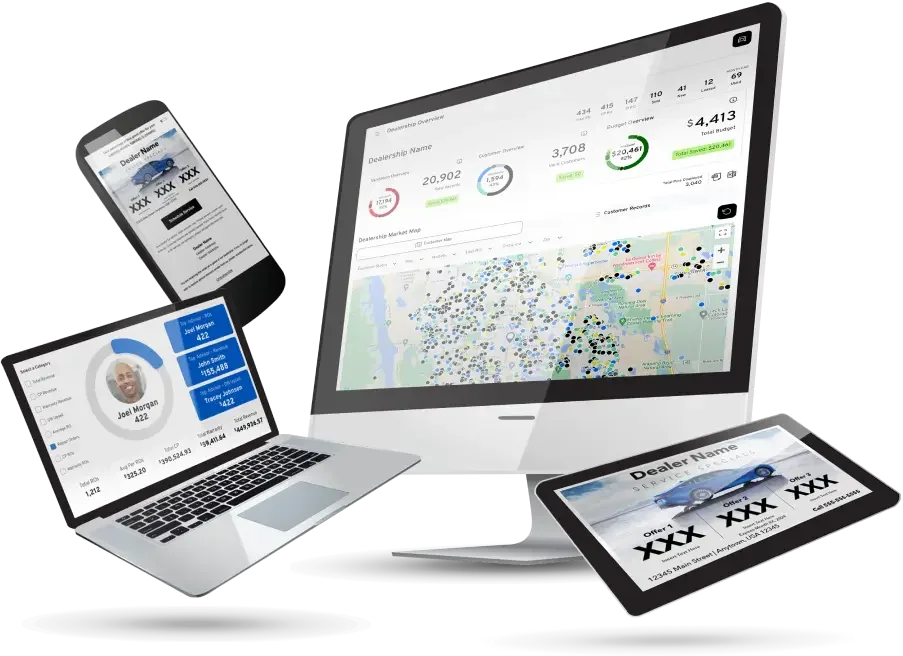
For a multi-rooftop group, the first job is establishing a consistent identity resolution and reporting standard across every store, regardless of which DMS or prior marketing vendor each store used. This creates a common baseline so results from store three and store nine are actually comparable.
- Identity resolution runs across all rooftops using the same matching standard.
- Attribution and reporting use one consistent methodology group-wide.
- A dedicated program lead coordinates rollout and store-specific input.
- Co-op and brand compliance is tracked per franchise across the group.
- Multiple rooftops
- Shared data standards
- Comparable reporting
How Per-Store Accountability Is Preserved
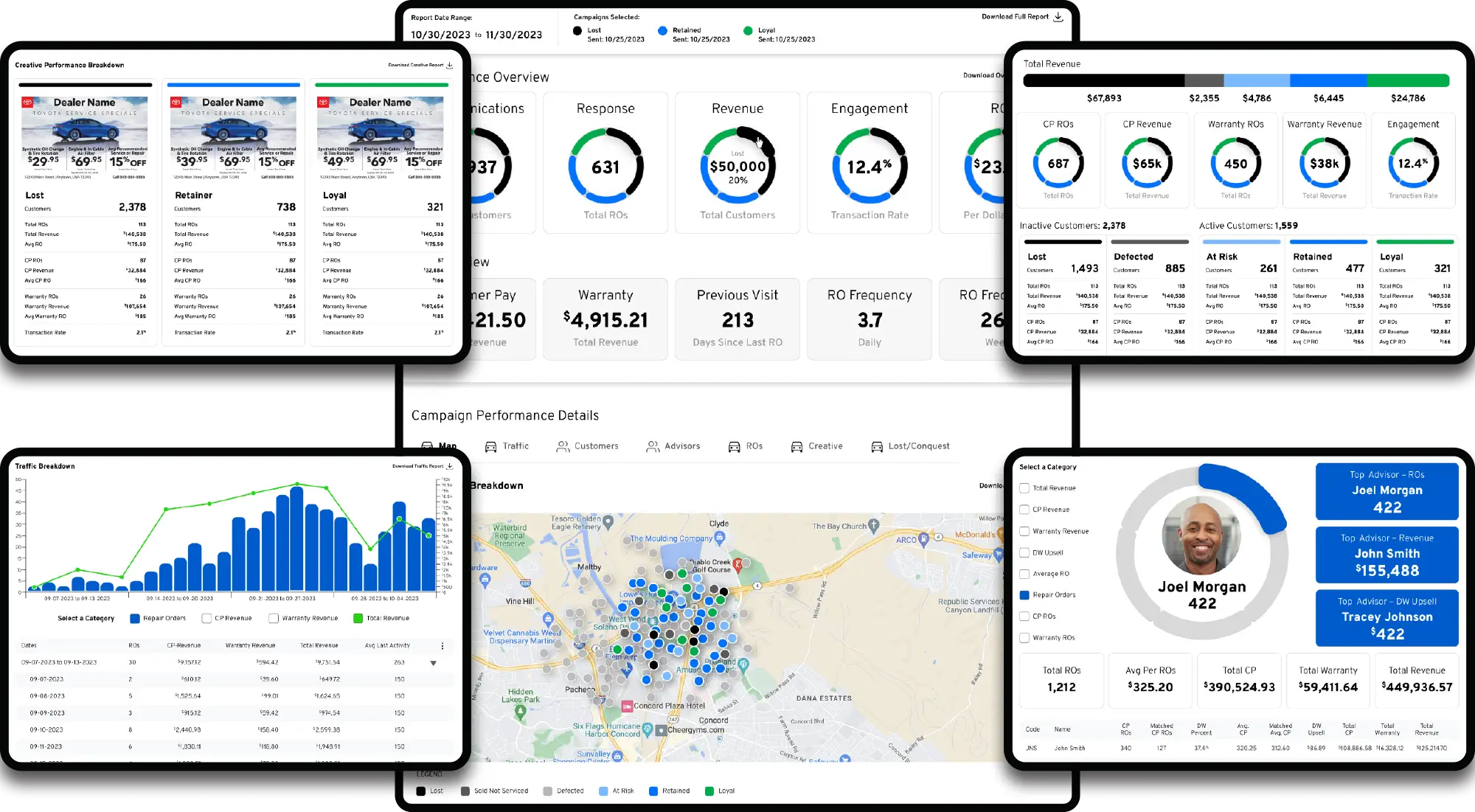
A common mistake in group programs is building reporting that only serves the corporate rollup, leaving individual GMs without visibility into their own store's results. We build store-level reporting as a first-class output, not an afterthought, so each rooftop's GM can see their own retention lift, declined-service recovery and RO impact directly.
- Each rooftop
- Store-level results
- Group-wide visibility
How a Single-Rooftop Program Is Structured Differently
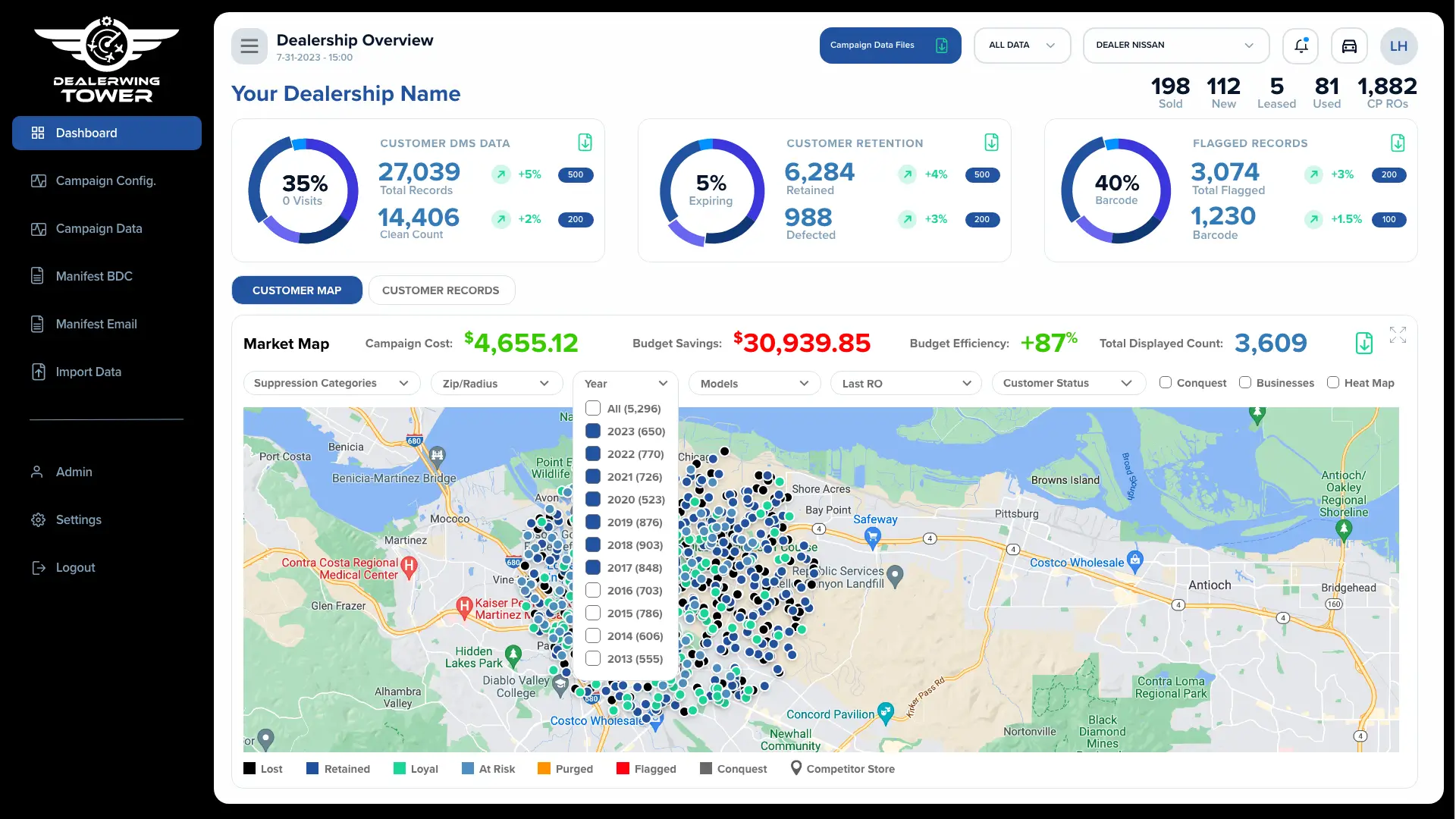
A single dealership doesn't need cross-store identity reconciliation or a group reporting rollup. The engagement is built directly around that store's DMS, its specific competitive market, and its own service team's workflow, without the overhead a group program requires.
- Identity resolution runs against a single DMS and OEM feed, with faster turnaround.
- Market evaluation can go deeper on local competitive detail.
- Decisions run directly through the GM or service director without a multi-store approval chain.
- Single dealership
- Local market
- Direct decisions
Why Rollout Gets Faster After the First Store
Once a group has established identity resolution and reporting infrastructure, and proven a program at one rooftop, extending that same program to additional stores does not require rebuilding the data foundation. The infrastructure is shared. What changes per store is the specific customer data, local market conditions and store-level performance baseline.
- Prove the first store
- Reuse the foundation
- Extend the rollout
What to Ask Depending on Which Model Fits You
The right questions differ depending on whether you're evaluating a group program or a single-store engagement.
- Groups: How is identity resolved consistently across stores with different DMS platforms?
- Groups: Will each GM see their own store's performance, or only a corporate rollup?
- Single rooftop: Is this program sized for one store's actual volume and market, or is it a scaled-down group template?
- Both: How quickly can a second store or a next program roll out once the first is proven?
- Choose the model
- Confirm visibility
- Plan the rollout
FAQ
Common questions
Do you charge more to work with a dealer group versus a single store?
Pricing scales with the actual scope of work, including the number of stores, DMS platforms and brands involved, rather than a flat enterprise markup.
Will our individual store GMs see their own performance data?
Yes. Store-level reporting is built as a standard part of any group program, alongside any corporate rollup view.
Can we start with one rooftop and expand to the rest of our group later?
Yes. This is a common path. Proving a program at one store first, then extending it, is usually faster than launching group-wide on day one.
How do you handle stores in our group that use different DMS platforms?
Identity resolution is built to reconcile records across different DMS platforms into one consistent standard, so results remain comparable across stores.
Is a single-rooftop program a scaled-down version of the group product?
No. It's built directly around that one store's data, market and workflow, without the group-level governance layer that a multi-store program requires.
How is co-op funding coordinated across a multi-brand group?
Each franchise's co-op eligibility, deadlines and brand guidelines are tracked separately and in parallel, since group programs often span multiple OEM relationships at once.
Who is our main point of contact if we're a group with multiple stores?
Group engagements are assigned a dedicated program lead who coordinates across stores, in addition to any store-level contact needed for local execution.