
Solutions
Service Retention Programs for Franchise Dealers That Actually Measure Return
Bring Lost Customers Back Before Free Maintenance Ends and They Disappear
Retention leaks quietly. A customer's free-maintenance window ends, or they move, or a competitor's coupon lands at the right moment, and they simply stop showing up. There is rarely a single dramatic event. By the time the drop shows up in a monthly retention report, the customer has usually been gone for months.
Dealerwing builds retention and lost-customer reactivation programs specifically for franchise dealers, using DMS and OEM service history to flag exactly which households are overdue based on mileage, time and brand-specific intervals. We validate contact data before we reach out, sequence mail, email, SMS and voice based on predicted response, and measure the result against a real control group.
This is fixed ops growth you can measure, not a retention newsletter you hope is working. Every program reports incremental lift in returned repair orders, not impressions or opens.
Customer Loss Defined by Real Intervals
Lost-customer windows are set by brand-specific service intervals, mileage and your store's historical return patterns, not a generic 12-month rule.
Validated Before Outreach
Contact data is refreshed and verified before a single mail piece or call goes out, so the program isn't wasted on dead records.
Sequenced, Not Single-Touch
Mail, email, SMS and voice are timed together based on predicted response instead of one campaign firing once and stopping.
Measured Against a Control Group
Every program compares exposed customers against a holdout group to show incremental return rate, not assumed credit.
How it works
A process built on validated data
Identify the Lost-Customer Window
Flag customers overdue based on mileage, time and brand-specific service intervals.
Validate and Refresh Contact Data
Update phone, email and address before any outreach is sent.
Sequence the Outreach
Time mail, email, SMS and voice together based on predicted response for each household.
Drive to a Scheduled Appointment
Make responding easy with landing pages, appointment forms or tracked phone numbers.
Measure Against a Control Group
Compare exposed vs. holdout customers to report real incremental return rate and revenue.
Use cases
Where Lost Customers Actually Come From
Retention loss doesn't happen at one moment. These are the points in the customer lifecycle where dealers lose the most ground.
End of Free Maintenance
The free oil changes end, and so does the visit.
This is the single largest drop-off point in service retention. A timed sequence before the free period ends keeps the relationship going past it.
First Missed Interval
One skipped service visit predicts the next.
Customers who miss a single scheduled interval are significantly more likely to be lost entirely without a nudge back in.
Out-of-Warranty Transition
Once the warranty ends, independents look cheaper.
Messaging that addresses cost and trust directly at this transition point keeps customers from defecting to an independent shop.
Ownership Change or Relocation
The customer moved, but the campaign didn't notice.
We flag address and ownership changes so retention effort isn't wasted chasing customers who are realistically out of market.
Multi-Vehicle Households
One car stayed loyal, the other one didn't.
Household-level data surfaces vehicles that have quietly drifted away even when the primary vehicle is still being serviced with you.
Seasonal Drop-Off
Some customers only think about their car twice a year.
Timing outreach around seasonal service needs, like AC checks or winter prep, catches customers when the need is top of mind.
No Prior Follow-Up At All
Some customers have simply never been asked to come back.
A surprising share of lost customers never received any reactivation outreach. The gap isn't resistance, it's silence.
Deep dive
Understanding Service Retention and Reactivation
Why customers are lost, how lost-customer windows are defined, and how retention programs are actually measured.
The True Cost of a Lost Service Customer
A service customer who stops coming back is not just a missed repair order. It is lost declined-service opportunity, lost recall compliance revenue, lost parts and labor across every future visit, and often the first sign that the customer's next new-vehicle purchase will happen somewhere else. Fixed ops retention and sales retention are more connected than most dealers treat them.
The cheapest service customer to keep servicing with you is the one who already trusted your store enough to buy or service there once. Reactivating them is almost always more efficient than conquest marketing for a new one.
How Lost-Customer Windows Are Actually Defined
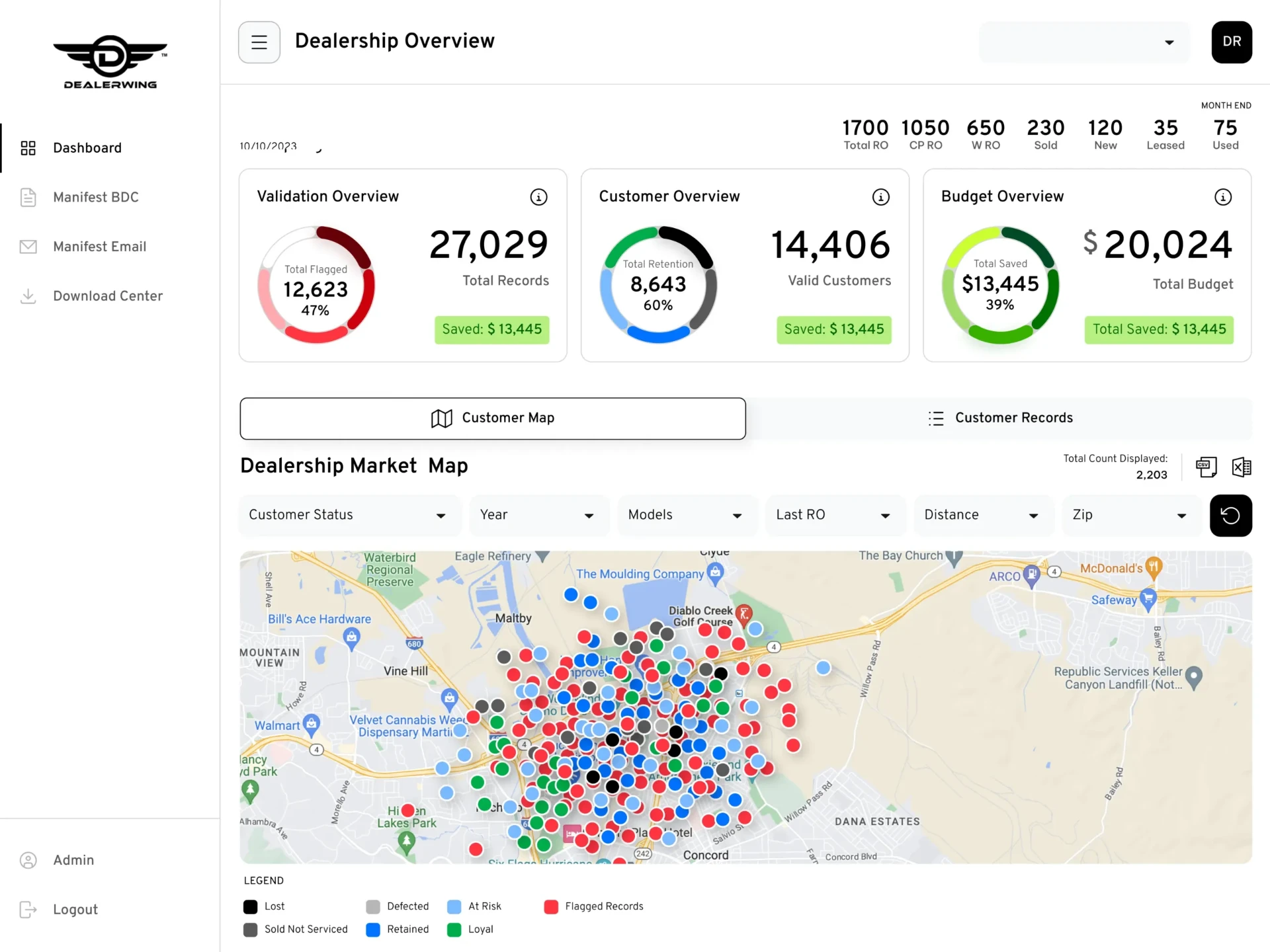
A lost-customer window is not a single fixed number of days. It is defined by brand-specific service intervals, vehicle mileage, days since the last visit, and your store's own historical patterns for when customers realistically return.
- Brand-specific maintenance intervals set the expected return window for each model.
- Mileage-based triggers catch customers who drive more or less than average.
- Days-since-last-visit thresholds are tuned per rooftop based on historical return behavior.
- Free-maintenance expiration dates are tracked as a distinct, higher-risk lost-customer trigger.
Why Contact Data Has to Be Validated First
A retention campaign sent to a stale address or a disconnected phone number does not fail quietly. It looks like the customer ignored you, when in reality the message never had a chance of arriving. Before any lost-customer sequence runs, contact data is refreshed and checked against current ownership and reachability.
How the Omnichannel Sequence Is Built
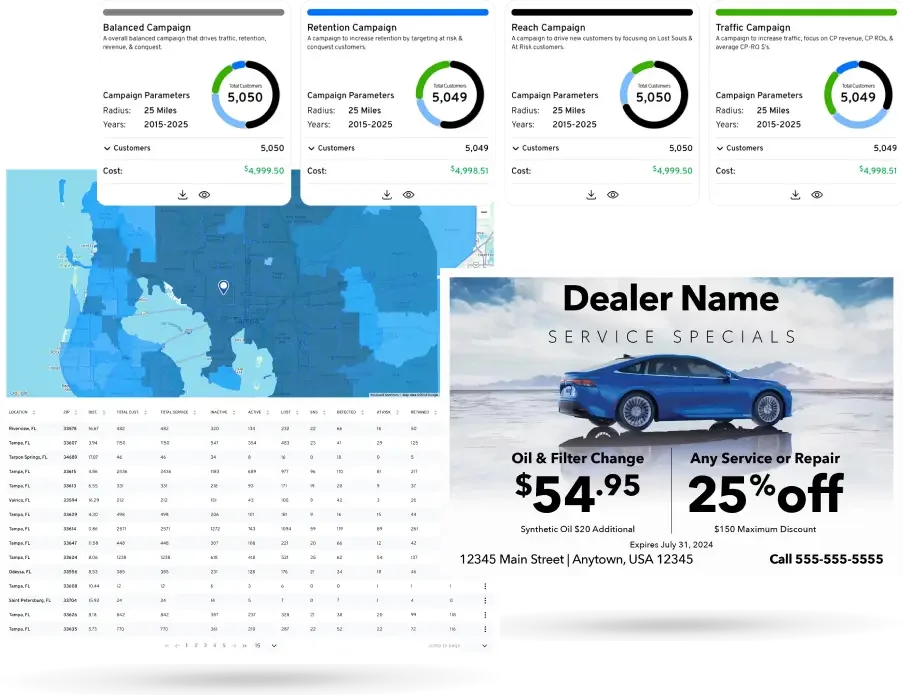
Retention response rates improve with a sequenced, multi-touch approach rather than a single mailer. We time mail, email, SMS and voice outreach based on predicted response likelihood for each household, so higher-value or higher-urgency customers get a more persistent, personal sequence.
- Mail establishes initial awareness with strong response rates for older or less digitally-engaged households.
- Email and SMS follow up with lower-cost, faster touches for reachable digital contacts.
- Voice outreach, human or AI-assisted, handles higher-value or unresponsive households.
How Retention Programs Are Actually Measured
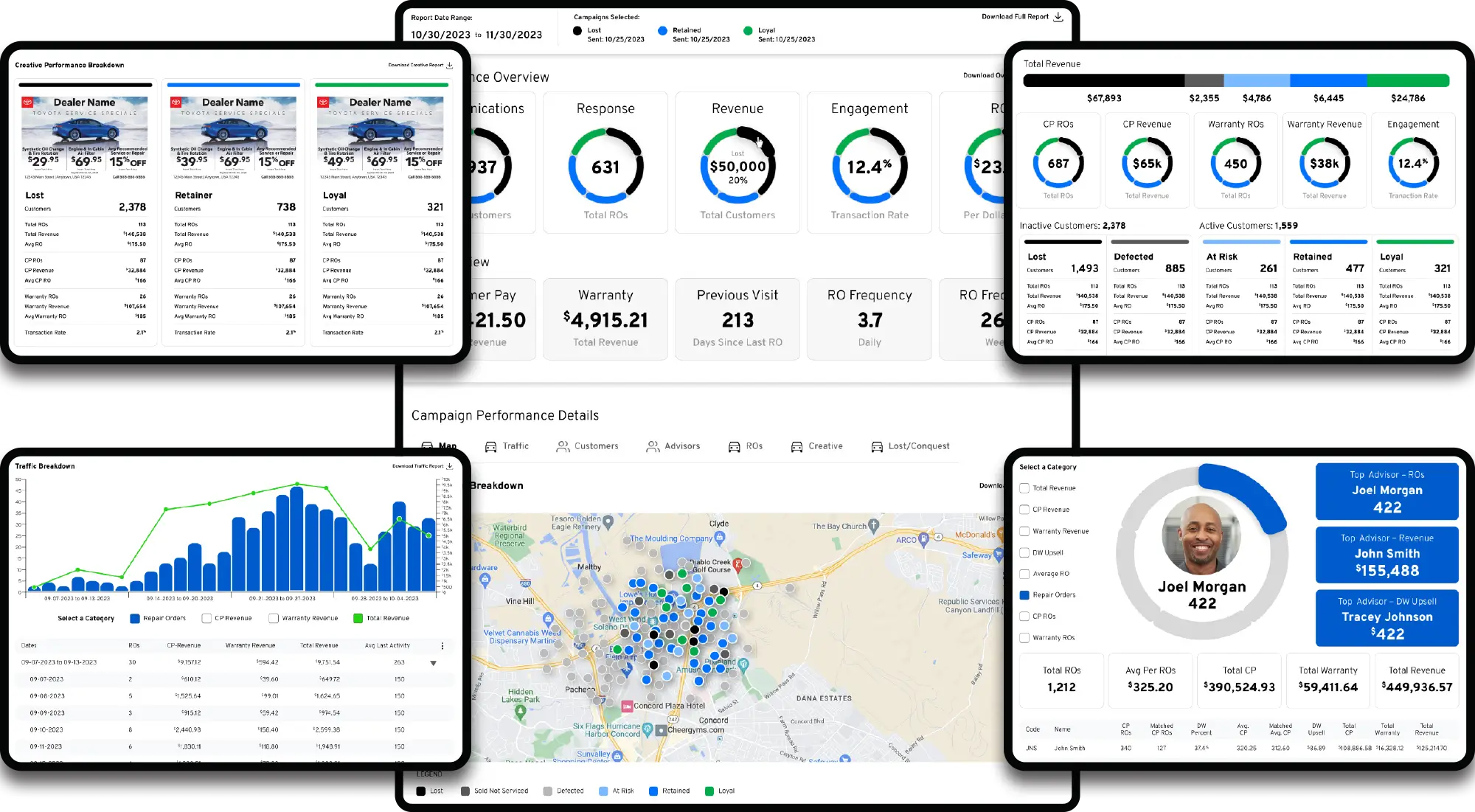
A retention program is only proven if you can compare what happened to exposed customers against a similar group that received nothing. We build a statistically similar control group for every program and report the incremental return rate and revenue per recovered household, not just total responses.
What Dealers Should Ask Before Launching a Retention Program
Retention programs are easy to run and easy to run badly. Before committing budget, leadership should understand exactly how the program is targeted and measured.
- How is a 'lost customer' defined for our specific brand and store?
- Has the contact data been validated before this campaign launches?
- Is there a control group to measure incremental lift?
- What is the reporting cadence, and does it tie to actual repair orders?
- Can this be funded partly through OEM co-op dollars?
FAQ
Common questions
How do you define a lost customer for our brand?
Lost-customer status is set using your brand's service intervals, vehicle mileage, days since last visit and your store's own historical return patterns, tuned per rooftop rather than applied as a flat rule.
How is this different from a generic 'we miss you' mailer?
Generic mailers go to everyone with a stale record. Our programs validate contact data first, sequence multiple channels based on predicted response, and measure incremental lift with a real control group.
Can this run alongside our current CRM reminders?
Yes. Many dealers run this as a layer on top of existing CRM reminder tools, since most reminder tools don't validate data or measure incremental return.
How quickly can we expect to see results?
Initial response typically starts within the first two to three weeks of a sequence, with fuller retention lift measured over a 90 to 180 day window against the control group.
Can OEM co-op dollars fund a retention program?
In many cases yes. We can structure programs and documentation to align with common OEM and co-op fixed ops program requirements.
What if a customer has already left for an independent shop?
Reactivation messaging is built to address cost and trust concerns directly, which are the most common reasons customers defect to independents once out of warranty.
How do you handle multi-rooftop groups with different retention patterns per store?
Lost-customer windows and response models are tuned per rooftop even within a single group program, since return patterns vary by store, brand mix and local market.